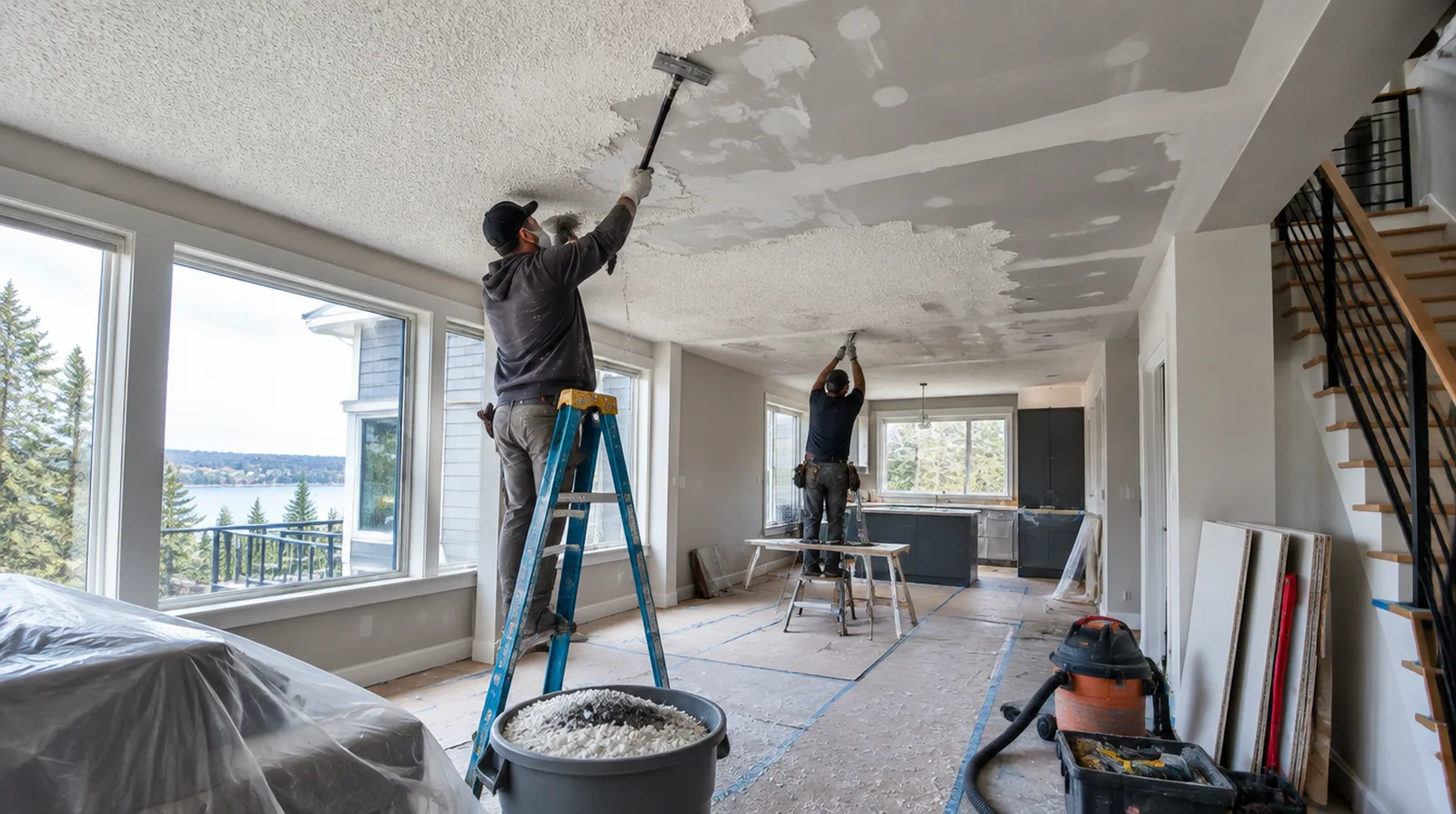
Check for painted coatings
Paint over a textured coating can change how readily the material releases. Assess a controlled test area so the method, labor and potential substrate repairs are understood. For a small repair with extensive setup, compare the total scope rather than assuming the price should follow the hole dimensions alone.
Confirm primer and paint
The newly exposed and repaired ceiling needs an appropriate coating plan after it dries. Clarify whether the drywall quote stops at a ready for painting finish or includes decorative coatings. At a ceiling or wall containing fittings, assign removal and reinstatement duties for the affected devices before repair access is needed.
Review ceiling condition
The texture may conceal uneven joints, old patches or an unfinished board surface. Allow for assessment and further finishing after safe removal exposes the original face. For work spread across different planes, record their dimensions separately and describe the boundary of the treatment on each surface.
Repair exposed imperfections
Scraping may expose torn paper, dents and joint defects that need stabilization before a new finish. The repair allowance should be discussed before the original texture is removed. Where a finished perimeter is prominent, decide whether trim stays in position or is removed before agreeing how the new surface meets that edge.
Avoid unnecessary saturation
Avoid a process that introduces so much water that it damages the supporting gypsum. Choose the method with regard to both the coating response and the condition of the board beneath it. When the protected room includes a doorway, check the clearance for panel movement as well as the amount of space available for finishing tools.
Choose the final surface
The intended replacement finish should be selected before the removal and restoration work is priced. A new patterned finish and a flat smooth ceiling can need substantially different preparation. In a room with little free floor space, identify temporary storage for belongings and establish enough clearance for the work before delivery.
Separate specialist work
Confirmed hazardous material removal is not an ordinary drywall scraping task. Have an appropriate professional address containment, disposal and handling before subsequent drywall finishing is arranged. If the ceiling or wall includes fittings, identify the person responsible for removing and reinstalling each item before the work begins.
Account for side lighting
When heavy texture is removed, side lighting may expose imperfections previously concealed by its relief. Broader finishing or a skim coat may be needed where the original surface was never intended to remain smooth. If materials must cross common building areas, plan the protection and access route so other occupants are not needlessly obstructed by deliveries.
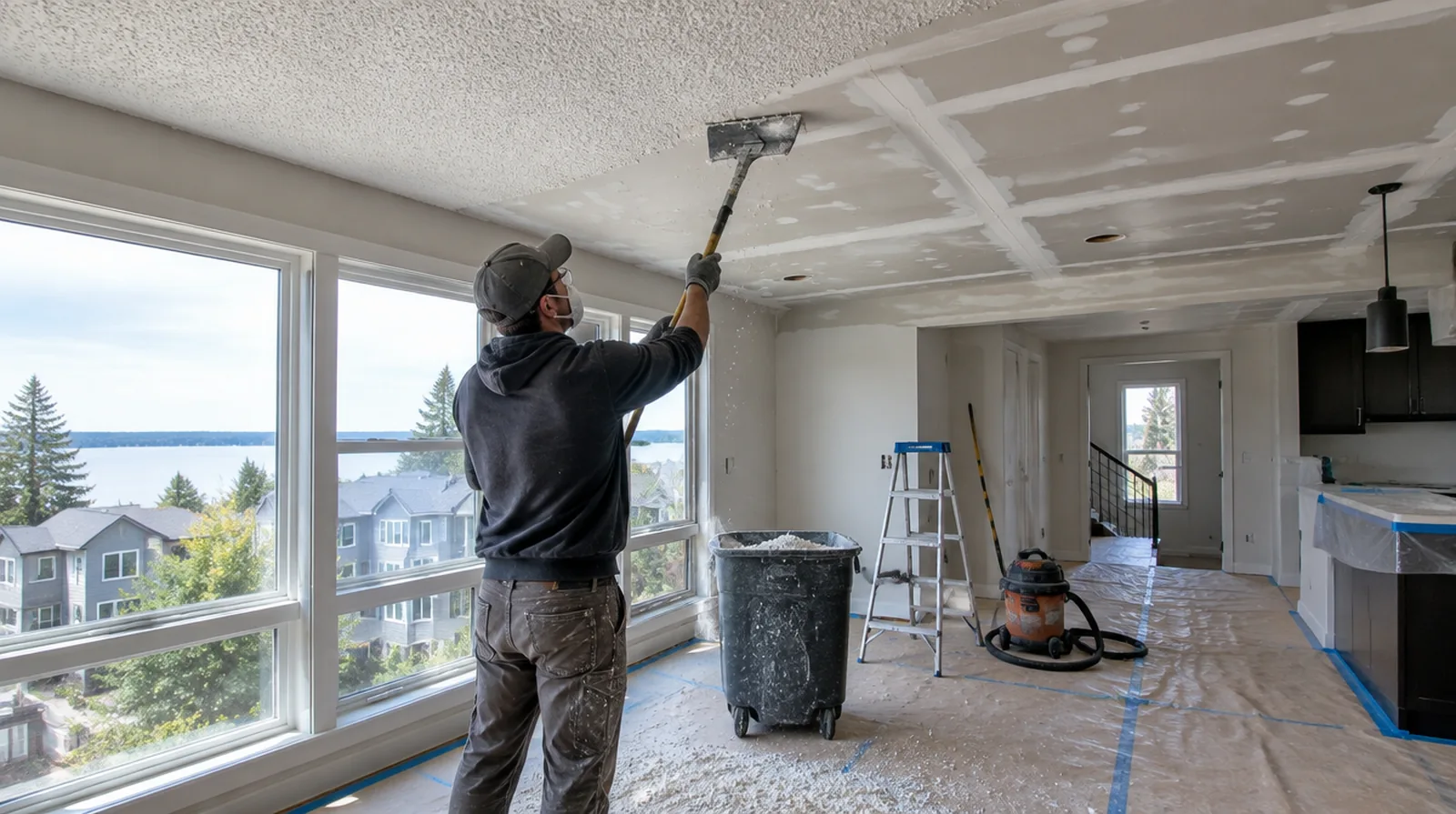
Establish material safety
Older textured ceiling coatings may contain asbestos and ought not to be scraped without appropriate evaluation. Where asbestos could be present, arrange suitable testing and follow the applicable process before removal begins. At the handover inspection, review the finish from ordinary room positions using the lighting conditions that were agreed for the work.
Plan cleanup and reopening
The room should be reviewed after debris removal and the agreed finishing steps are complete. Allow for drying and painting time instead of assuming the space is usable immediately after scraping. If the surface condition is uncertain, allow for an assessment that can distinguish stable material from layers that should not be covered.
Project context in Kirkland
Afternoon traffic on I-405 makes morning visits easier for second and third coats in Kirkland. Painting the whole stairwell wall after a repair gives a more even finish under skylight glare.
Scope questions before finishing
Where a finished perimeter is prominent, decide whether trim stays in position or is removed before agreeing how the new surface meets that edge.
For an older repair with no clear history, describe when the mark first appeared and whether it has changed through more than one season.
Where a surface has been painted many times, consider whether differences in texture or sheen will require a wider decorative treatment.
If the proposal requires return visits, identify the purpose of each stage and the intervals during which finishing material needs to remain undisturbed.
When concealed damage is possible, establish how additional findings and any proposed removal will be recorded before the scope changes.
When painting is outside the proposal, describe the remaining decorative preparation clearly so another contractor can price that stage accurately.
For a planned new wall mounted fixture, resolve its backing requirements while the cavity remains open instead of cutting into completed drywall later.
When the decorative coating has been selected, tell the finisher its intended sheen and color while the surface preparation standard is still being agreed.
For a small repair with extensive setup, compare the total scope rather than assuming the price should follow the hole dimensions alone.
If the project is part of a larger remodel, settle the sequence with flooring, trim and cabinet work before setting a final finishing date.
If the surface condition is uncertain, allow for an assessment that can distinguish stable material from layers that should never be covered.
When the same defect has returned, share information about previous repair methods so the next assessment can consider why they did not last.
Explore the Kirkland drywall overview for related options, or read the project planning information before arranging the next stage.
More planning details for Kirkland
Shared driveways in Kirkland townhouse developments mean deliveries need a time that keeps neighbors moving. Remodeled ramblers in Kirkland sometimes mix original texture with newer smooth sections that need blending. Kirkland's long rainy season keeps indoor air damp, so steady heat and a dehumidifier help compound dry between coats.