Set realistic blend expectations
An exact invisible match is not always possible on a weathered or repeatedly painted surface. A wider wall treatment may be worth discussing if a localized repair remains conspicuous. When building management controls access, agree delivery hours and common area protection before committing to a start or finish date.
Consider hand applied surfaces
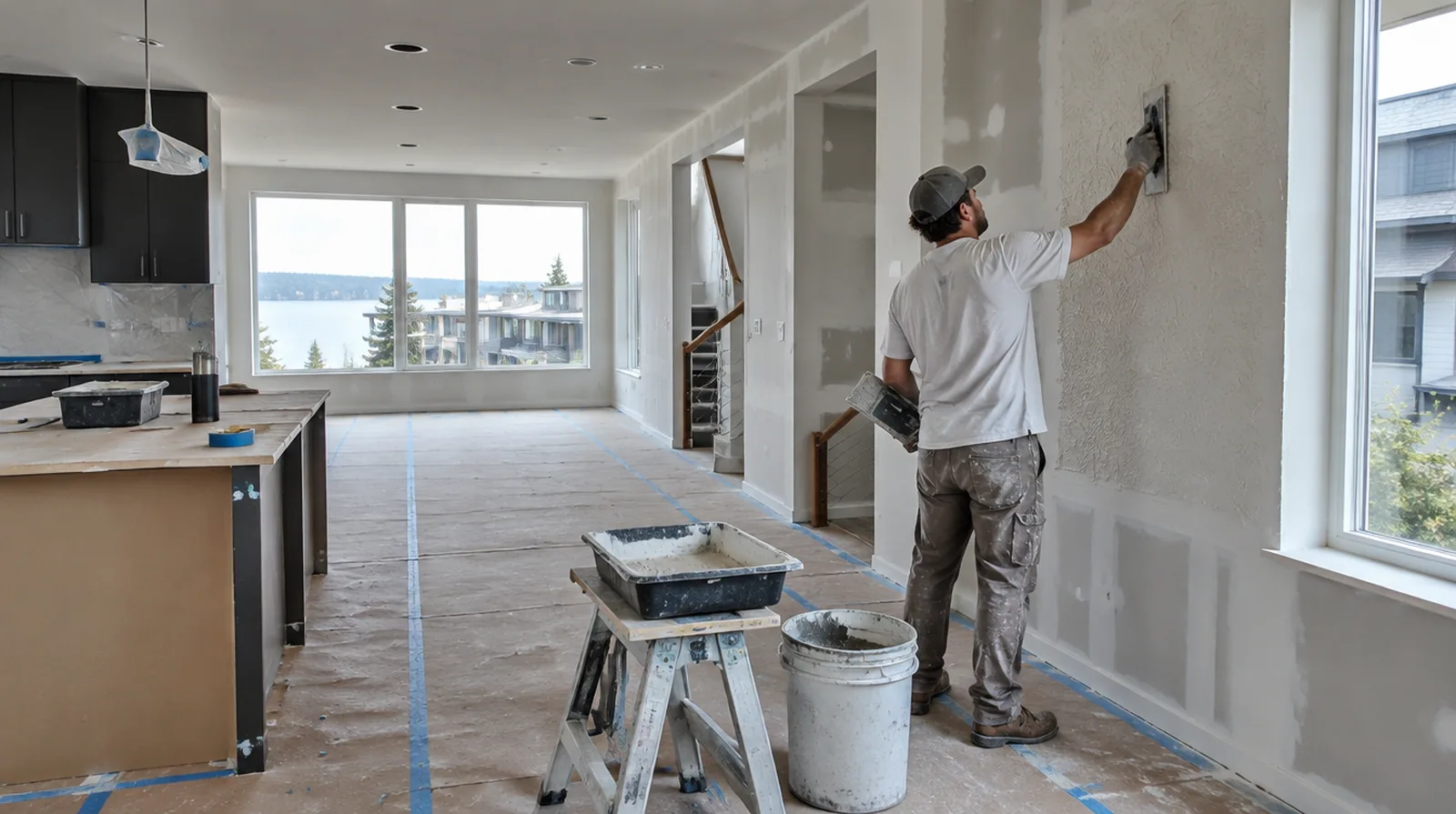
Troweled textures need attention to tool direction, pressure and spacing between repeated shapes. A sample is notably helpful when the original finish was created without a regular sprayed pattern. If a separate painter completes decoration, agree the condition of the handed over surface and assign responsibility for small final corrections.
Use appropriate primer
New texture and adjacent painted material can absorb finish coats at distinct rates. Choose suitable primer to support the coating system without unnecessarily flattening the intended pattern. If the completion date matters most, allow for intervals between coats as well as active labor rather than assuming the entire process happens continuously.
Control application conditions
Compound consistency and application distance affect how a sprayed pattern lands on the wall. Room conditions and drying rate also influence when a knockdown pass ought to be made. For a room that stays in use, set a workable boundary around construction while retaining the access people need for normal daily activities.
Judge from normal positions
Assess the dried texture from everyday viewpoints rather than judging only a close view of a wet sample. Include side lighting and the planned coating sheen when deciding whether the result meets the agreed scope. If the proposal requires return visits, identify the purpose of each stage and the intervals during which finishing material needs to remain undisturbed.
Prepare a sample area
A small test helps establish particle size, spacing and the amount of flattening needed. Approve the sample before extending the treatment across the entire repaired area. At a ceiling or wall containing fittings, assign removal and reinstatement duties for the affected devices before repair access is needed.
Study the paint layers
Repeated painting can soften an old pattern and change how its peaks reflect light. A fresh application could need adjustment to resemble the current surface instead of the original texture recipe. Where a surface has been painted many times, consider whether differences in texture or sheen will require a wider decorative treatment.
Check the underlying repair
A decorative pattern will not reliably disguise a ridge or an uneven board joint underneath it. Complete a stable level repair before trying to reproduce the surrounding texture. When photographs are used for an initial discussion, include a wide room view as well as a close view so scale and surrounding finishes are understandable.
Identify the existing pattern
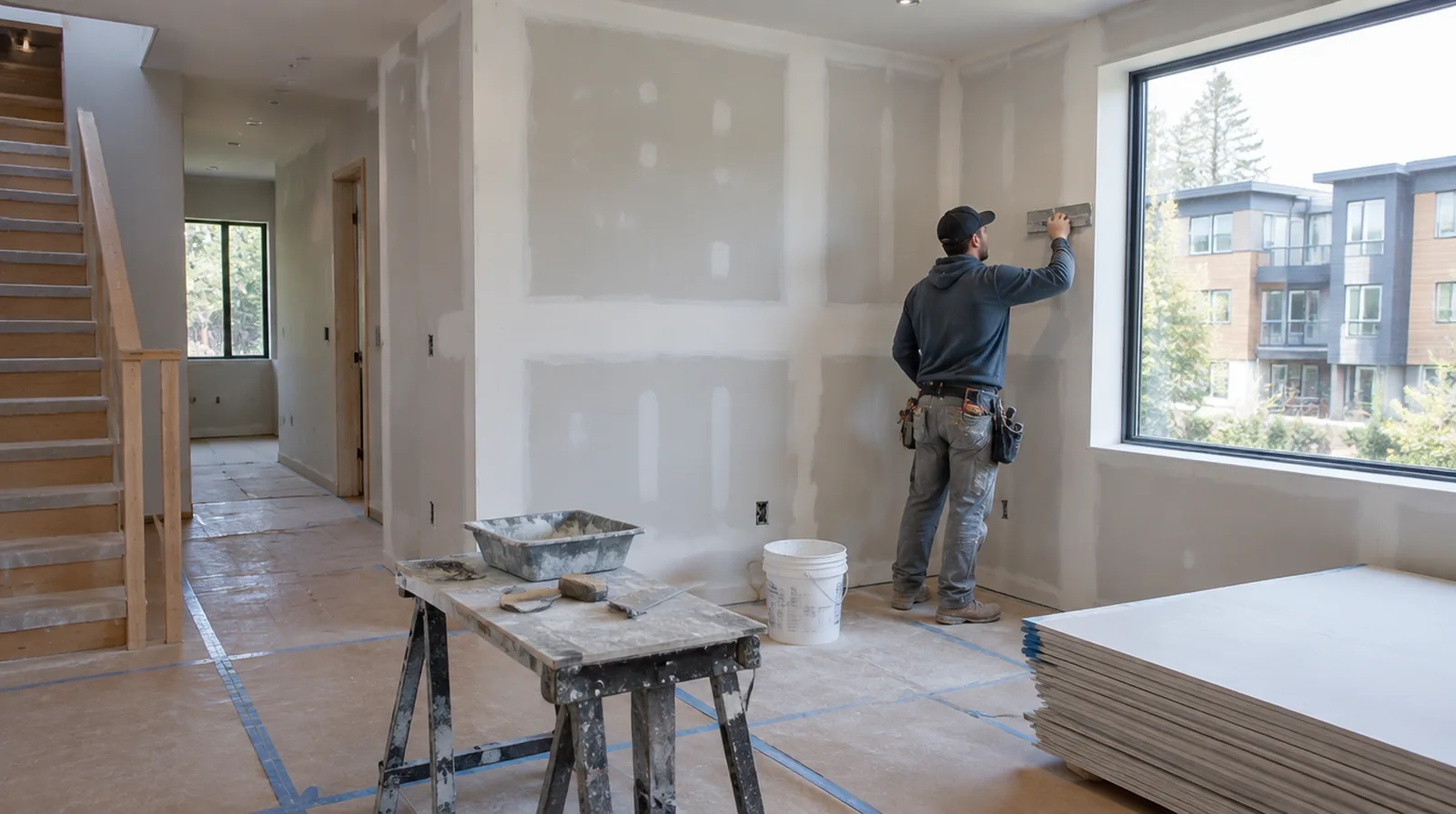
Orange peel, knockdown and hand applied textures create distinct depths and shadow lines. The existing wall should be examined in the actual room lighting before selecting a matching method. Where existing floors will remain, specify protective measures and review the path used by panels, equipment and finishing tools.
Protect surrounding finishes
Mask adjacent materials against sprayed compound and other application debris. Protect the full reach of the operation, including fittings and trim beyond the original damaged spot. When photographs are used for an initial discussion, include a wide room view as well as a close view so scale and surrounding finishes are understandable.
Project context in Kirkland
Many new Kirkland homes have smooth Level 5 walls, which leave little room for visible patch edges. A stairwell repair over three flights needs safe access that protects the stair treads and railings.
Scope questions before finishing
Where occupants have dust sensitivity concerns, agree containment and cleaning measures before settling the way the space will be staged.
If the problem developed after another renovation, explain which nearby materials or building systems changed before the damage became visible.
Where a future fixture will be installed, coordinate any required backing while the cavity is accessible instead of reopening the completed wall.
If the interior will remain occupied, identify a practical separation between the project space and the space that still needs daily access.
Where light reflects along the wall, inspect the complete plane instead of limiting the review to the edge immediately next to the repaired section.
For a distinctive existing pattern, retain a reference sample or detailed picture to make the matching discussion more specific.
When reviewing the finished work, use the agreed lighting and natural room viewpoints so the assessment reflects the intended use of the space.
If the wall work belongs to a broader renovation, coordinate its order with flooring, cabinetry and trim rather than scheduling finishing in isolation.
When a paint contractor follows the drywall work, define the surface condition being handed over and decide who handles any minor final touch ups.
When the decorative coating has been selected, tell the finisher its intended sheen and color while the substrate preparation standard is still being agreed.
Where a neat final edge matters, agree whether the finish ends against existing trim or whether that trim will be removed and replaced.
Where existing floors will remain, specify protective measures and review the path used by panels, equipment and finishing tools.
Explore the Kirkland drywall overview for related options, or read the project planning information before arranging the next stage.
More planning details for Kirkland
Kirkland's long rainy season keeps indoor air damp, so steady heat and a dehumidifier help compound dry between coats. Shared driveways in Kirkland townhouse developments mean deliveries need a time that keeps neighbors moving. Remodeled ramblers in Kirkland sometimes mix original texture with newer smooth sections that need blending.